Pages

Showing posts with label Social Studies. Show all posts

Thursday, August 26, 2021

Kristallnacht - Social Studies

 Kristallnact - 'The Night Of Broken Glass'

On November 9th, 1938, a wave of anti-Jewish violence and demonstrations took place

throughout parts of Germany and Austria. The assassinations of Ernest vom Rath, the third secretart of the German embassy, by 17-year old Jewsh refugee Herschel Grynszpan gave Hitler and his Nazi party enough amnunition to launch their full-scale annihilation of the Jewish population, starting with a single night of destruction known as Kristallnacht, or 'Night of Broken Glass'. This might was an integral step in fulfilling Hitler's Final Solution of the Jewish Question, by first destroying over 1000 synagogues, 7000 Jewish businesses, and deporting over 30,000 Jewish men to concentraion camps.


Significance of Kristallnacht

Kristallnacht highlights the overall intent and coordination behind the Holocast conducted by Hitler and the Nazi Party. The manipulation of events surrounding this night, as well as the organisation of violence and destruction communicates the dangers of a totalitarian regime and the true inflence that Hitler held over the German people. This coordination was a key factor leading up to the mass killing of Jews now considered a genocide, however it is only in retrospect that we can understand this.


Nuremberg Laws - Social Studies

 Nuremberg Laws

As part of our Holocaust learning in Social Studies this term, one of our task was to learn about the Nuremberg Laws. Below are some information about what the Nuremberg Laws are and how they affected society especially the daily lives of the Jewish People, and then are some question with my answers.

On september 15, 1935, the Nazi passed two new laws at their annual Reich Party Congress in Nuremberg, Germany. The Laws took German citizenship away from Jews and banned both marriage and sexual relationships between Jews and non-Jews.


The Nuremberg Laws did not idenitfy a "Jew" as someone with particular religion beliefs. Instead, the first amendment to the Nuremberg Laws defined anyone who had three or four Jewish grandparents as a Jew, regardless of whether that individual recognised himself or herself as a Jew or belonged to the Jewish religious community. Many Germans who had not practiced Judaism (the Jewish religion) or who had not done so for years found themselves caught in the grip of Nazi terror. Even people with Jewish grandparents who had converted to Christianity could be defined as Jews.

Why did the Nazis enact the Nuremberg Race Laws?

The Nazis enacted the Nuremberg Laws, because they wanted to put their ideas about race into law. They believed in the false theory that the world is divided into distinct races that are not equally strong and valuable. The Nazis considered Germans to be members of the supposedly superior "Ayran" race. They saw the so-called Aryan German race as the strongest, and most valueable race of all. According to the Nazis, Jews were not Aryans. They thought Jews belonged to a separate race that was inferior to all other races. The Nazis believed that the presence of Jews in Germany threatened the German people. They believed they had to separated Jews from other Germans to protect and strengthen Germany. The Nuremberg Laws were an important step towards achieving this goal.


Questions & Answers

1. Provide two examples of ways in which the Nuremberg Laws affected the rights of German Jews.

Due to the Nuremberg laws that German Jews were basically not human, they didn't have the equal freedom that everyone else did, such as they were no longer admitted to municipal hospitals, every human has a right to treatment for their health and Jewish university students were not allowed to sit for doctoral exams, I personally think that this is unfair and that is taking away education from someone.

2. What other actions were taken that discriminated against Jews in Germany?

In December 1935, the Reich Propaganda Ministry issued a decree forbidding jewish soldiers to be named among the dead in World War I memorials.

3. Why do you think that the Nazis passed these laws?

I think it's because they've been brainwashed with all this nonsense, and probably because the government needed someone or something to blame and therefore it has to be Jewish people.

4. If a New Zealand government passed a law that provided for different treatment of a named racial group in New Zealand, what do you think the reaction of most New Zealand people would be?

If the New Zealand government did pass a law like this, I think there would be conflit and war within the country, but luckily in a country like New Zealand there are many educated and understanding people that will oppose this law because it is wrong to treat other people differently.

5. Do you think these Nuremberg laws were racist?

I strongly believe that the Nuremberg laws were racist and showed discrimination against the Jews. Taking away human rights from someone is straight discrimination, not being able to ahve sexual relationships or be able to marry a Jew is racist, because your pointing someone out (or a group of people). Not giving them the right to basic living things such as education, careers, treatment for health is considered racist. For something to be racist it donesn't just have to be about their skin colour it can be how you treat them, how you consider them and in this case this is an extreme case of racism and discrimination.

Adapted from http://www.ushmm.org/wlc/en/article.php?ModuleId=10005681


Friday, August 6, 2021

 The Great Depression

The Great Depression was a worldwide economic downturn that began in 1929 and lasted until about 1939. It was the longest and most severe depression ever experienced but the industrialized western world. Although the Depression originated in the United States, it resulted in drastic declines in output, severe unemployment, and acute deflation in almost every country of the globe. But its social and cultural effects were no less staggering, especially in the United States, where the Great Depression ranks second only to the Civil War as the gravest crisis in American history.

What was life like?


People played board games, puzzles, baseball, and listened to the radio (if they had one) to get their minds off the depression. Many farmers ran out of money and lost their farms. Those who didn't had to cope with the, "dust bowl", huge clouds of dust that flew across the great pains of American and Canada. These dust particles would enter the home and cause bad living conditions. many children left school to help their families by working. Children between the ages 10-18 worked in factories, mines, or farms. Women worked seasonal jobs, but usually had to quit because men were dominant.

Failures

The fall of the economy caused bank failures, many businesses to perish, and brought a rapid rise to the crime rate, suicide rate, and malnutrition rate. Birth rates dropped below the replacement level for the first time in American history. Divorce rates also dropped sharply since it was too expensive to pay legal fees and support two households. This caused many women to start working and husbands to leave their families.

Why was Germany hit the hardest during the Great Depression?

In 1929 as the Wall Street Crash led to a worldwide depression. Germany suffered more than any other nation as a result of the recall of US loans, which caused its economy to collapse. Unemployment rocketed, poverty soared ad Germans became desperate.

Explain what Germany had to agree to by signing the Treaty of Versailles?

The Treaty of Versailles is one of the most controversial armistice treaties in history. The treaty's so-called "war guilt" clause forced Germany and other central powers to take all the blame for World War I. This means a lot of territories, reduction in military forces, and reparation payments to Allied powers.

How was New Zealand affected by the depression?

In NZ, the effects of the crash were not immediate. But from 1930 export prices began to plummet, falling 45% by 1933. To a country overwhelmingly dependent on agricultural exports, this was devastating. By the end of 1930 urban businesses and manufacturers were feeling the flow-on effects. Demand for their goods and services fell, as did the prices they charged. Unemployment rose to 12% of the registered workforce in 1933, and those lucky enough to keep their jobs often found their wages slashed by as much as 20%.

Wednesday, August 4, 2021

Dawn Raids & The apology after 50 years

Dawn Raids

Boom & Bust:

The story of the dawn raids begins in the 1950s. At the time, New Zealand's economy was doing so well, there weren't enough people to do all the work, especially in factories. So the New Zealand government looked to the Pacific, introducing system that made it easy for Pacific people to live here. Many came on temporary permits or visas, but when the labour shortage continued, the government allowed workers to stay longer. Things suddenly changed in 1973, when hard times hit around the world. In New New Zealand, unemployment became a problem - in stark contrast to the decades before - and Pacific people became scapegoats. They were blamed for the lack of jobs, and some people started using the term "overstayer".

Operation Pot Black

In 1975, a National government, led by Robert Muldoon, came to power. Muldoon was determined to address the "immigration issue". his election campaign even used a television ad that showed a Pacific-looking character getting angry because there was no work. Muldoon's plan was to find a deport overstayers, which seemed fair enough - if people were breaking the rules. But Muldoon's government didn't act fairly. At the time, around two-thirds of New Zealand overstayers were British or North American - yet by far the largest number of people to be prosecuted were from the Pacific. As well as dawn raids, Pacific people also endured "blitzes". These were random checks, in public, when the police demanded proof of residency. Pacific people were treated like criminals in front of family, friends, workmates, and neighbours, and this caused humiliation and shame. The police named this work operation Pot Black.

Raid

The first dawn raids happened in March 1974 under a Labour government led by Norman Kirk. Each raid followed the same pattern: very early in the morning, police and immigration officials would force their way into Pacific people's homes demanding paperwork. They wanted permits, visas, passports - anything that proved a person's right to be here. In the first week of the raids, around eight Pacific people were arrested. This caused a public outcry. Although some of those arrested did have expired visas, for many New Zealanders, the targeting of ethnic groups was unacceptable. They believed that the dawn raids were destroying race relations in New Zealand as well as Pacific people's sense of belonging. Most of those arrested were taken from their homes with only the clothes on their backs. They were held in police cells until they could prove their right to be here. Those who couldn't either stayed on in the cells or reported to the police each day until they were deported. some never got to say goodbye to family; others were escorted onto planes while distraught family members watched. It was a sad time that divided communities in all kind of ways, with some people dobbing in others for being overstayers.

The Apology - 1st August 2021

New Zealand's -prime minister, Jacinda Adern, has issued a formal apology for historic racist policing of Pacific people and offered scholarships to Pacific students. Hundreds of people packed Auckland town hall on Sunday to hear the apology for the "dawn raids" of the 1970s duuring which authorities hunted for visa overstayers. The practice took place under both of New Zealand's major political parties, beginning with Labour prime minister Norman Kirk and continuing under the National's Robert Muldoon.

Q & A:

What did NZ encourage during the 1950s economic boom?

During the economic boom of the 1950s, New Zealand encouraged significant migration from the Pacific region to fill labour shortages in the manufacturing and primary production sector.

In the early 1970s, when the economy fell, who was blamed by parts of society?

The migrants. The migrants who became the focal point and scapegoat for these fears were largerly Pacific peoples.

What did the government decide to do in the 1970s?

Police and Immigration officials overwhelmingly conducted raids on the homes of Pacific families.

What did Pacific communities experience?

Residents in those homes were woken abruptly, physically removed from their beds and forced into police bans to be taken for questioning. Some were hauled to the police station to appear in court the next day barefoot, in pyjamas or in clothes loaned to them in the holding cells; others were wrongfully detained.

On August 1st 2021, what did the government convey?

Jacinda Adern, the prime minister of New Zealand, has formally apologised for police crackdowns int eh 1970s gthat targeted the country's Pacific communities. Adern on Sunday told a tearful crowd gathered at the Auckland town hall that her government was offering a formal and unreserved apology for the infamous "Dawn Raids".

What do you think the Pacific Community thought and felt in the 1970s?

I think that the Pacific community felt scared and confused, because they were asked to come to New Zealand, now they are being kicked out of New Zealand. Their thoughts are probably why are the governemnt and Police treating them like that. Until 1st August 2021 I believe some Pacific people still had that anger and fear in them.

What do you think the pacific community thought and felt about the apology?

I can still imagine the Pacific community devastated and angry, especially those who experience this horrible event, but on 1st August it was a very emotional event, because it took this long for the government to response and formally apologise about the Dawn Raids.

Why did Jacinda Adern write this?

A part of the formal apology held at the event in Auckland, Jacinda Adern also wrote a article apologising online on Facebook. I believe that Jacinda Adern wrote this to formally apologise to those who were affected and to the Pacific community that couldn't make it to the ceremony due to Covid-19.

What do you think Jacinda Adern wants people to understand after reading this?

That the governemnt was to blame for this horrible event that happened in the 1970s and they are sincerely sorry.

What is Ifoga?(samoan custom) Why did Jacinda Adern participate?

The ifoga is a public act of self-humiliation accompanied by the gift of 'ie toga or fine mats. It is a formal apology in the Samoan culture. During the event we witnessed Jacinda Adern perform the ifoga, a Samoan custom of asking for forgiveness. Ifo means to bow down or lower oneself. Ifoga is when an offender covers themselves with a Samoan fien mat as an atonement for their or thier kin's wrongdoing and until the family who was affected decided to forgiver them/or that person under the fine mat they will remove the mat from them.

Images:

A image of a migrant being arrested by the police
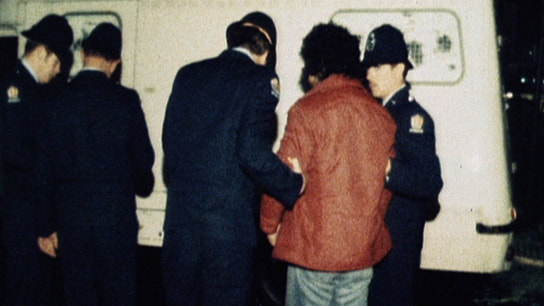
Dawn Raids

Here is an image of pacific people arriving in New Zealand for the first time
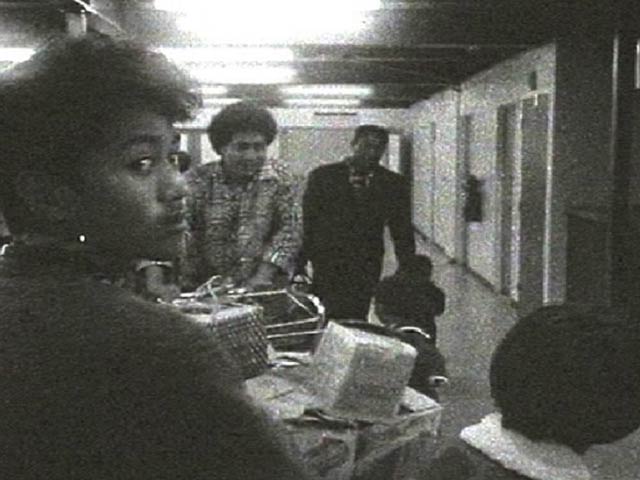
Pacific Islanders arrive in New Zealand – Ethnic inequalities – Te Ara  Encyclopedia of New Zealand

This is a photo of the home raids in 1970.
Clark rewrites history to conceal Labour started the Dawn Raids in the '70s  – FightBack

This image means a thousand words and it brought tears to alot of Pacific Islanders. After 50 years the government has finally decided to apologise regarding the dawn raids. This photo shows Jacinda Adern participating in the ifoga (samoan custom), this shocked the Pacific community because this is the first time a prime minister has apologised through samoan traditional customs.
Mat draped over Ardern as part of Govt's formal apology for dawn raids | 1  NEWS | TVNZ

Thursday, July 8, 2021

 Protecting Our Planet

This term in Social Studies we have been learning about the environment, we have looked at things that are polluting and harming the environment, ways human beings contribute to the idea of trashing the planet and we have also been learning about ways to fix this problem and protect our planet and environment. For one of our Social Studies class we went around Hornby High School picking up rubbish and we were surprised by the amount of rubbish that was around the school. For our assessment this term we had to create a Prezi/Presentation that summaries what we were learning in Social Studies. Here is the Link to my Prezi presentation

https://prezi.com/view/1zTmJDKxH3tC9NSHKlCK/

Wednesday, June 30, 2021

 Eco Tourism -Protecting Our Planet

Ecosystem

"An ecosystem is a unit of biological organisation interacting with the physical environment such that the flow of energy and mass leads to a characteristic tropic structure and material cycles".

Tourism

Tourism is the world's largest industry, it is the fastest growing economic sector, it has a positive and negative on people's lives and the environment.


What is Eco Tourism?
Ecotourism is now defined as "responsible travel to natural areas that conserves the environment, sustains the well-being of the local people, and involves interpretation and education". In simple terms, ecotourism is environmentally responsible travel to enjoy and appreciate nature and cultural experiences. Ecotourism should have low impact on the environment and should contribute to the well-being of local people... It can support the local economy and encourage people to protect nature instead of destroy it. 

Pros and Cons

  • Generates funds for conservation
  • Profitable alternative to exploitation for landowners
  • Protect wildlife habitats
  • Visitors are educated by an on-site visit
  • Visitors carry new ideas back to influence their own environment
  • Promotes and cultivates cultural awareness and respect
  • Encourages the tourism industry to be 'greener'
  • Economically benefits locals
There can be many problems, especially if the site is badly managed:
  • Degradation of fragile ecosystems
  • Wildlife is disturbed
  • Damages habitats
  • "Green Washing"
  • Success of ecotourism is bad for the environment
  • The site becomes over-visited
  • Foreign companies benefit the most


Ecotourism & the environment
Ecotourism helps protect natural habitats and pristine environments. The wealth of poorer countries is often tied up in natural resources like forests, minerals and land that could be used for agriculture. Exploiting these resources often means altering or destroying wildlife habitats and beautiful natural landscapes. Ecotourism allows countries and communities to build their economies without harming the environment, which means that local wildlife can thrive and visitors can enjoy untouched destinations. To check that vacation accommodation is environmentally friendly, check the accommodation's website for policies on waste management, recycling, renewable energy use and energy efficiency. 


Monday, May 31, 2021

  Social Studies - Causes & Effects Plastic Pollution

Action

Cause

(Why did it happen?)

Effect (Short/Long Term)

(What happened after?)

Littering

  • Construction

  • People are lazy

  • People do not care

  • Attitude towards littering

  • Immaturity

  • Stubborn behavior

  • Pack behavior

  • Low fines

  • Lack of education

  • Not enough trash cans

  • Spread of diseases

  • Injuries

  • Social costs

  • Social tensions

  • Increased probability for fires

  • Breeding ground for insects

  • Soil pollution

  • Water pollution

  • Air pollution

  • Decease in tourism

  • Visual pollution

  • Effects on life quality

  • Effects on animals

  • Effects on plants

  • Effects on aquatic life

  • Effects on birds

  • Economic effects

Daily use of plastic

Plastic is Everywhere! Plastic is used across almost every sector, including to produce packaging, in building and construction, in textiles, consumer products, transportation, electrical and electronics and industrial machinery. 

  • Plastic used in daily life are of extreme scientific and societal concern

  • Plastics can be found in the environmental and food sources 

  • Daily use of plastics can cause toxic impacts on environment and human health

  • Additives are more toxic than monomers to human-beings and wildlife

Provide an example of GOVERNMENTAL CONTROL (Already done/can be done)

Government announces plan to tackle problem plastics and seven single-use plastic items

Following the success of the phase out of single-use plastic shopping bags, the Government now has plans out more single-use and problematic plastics to reduce waste and protect the environment, Associate Minister for the Environment Eugenie Sage. The proposals are to phase-out:

  • Some hard-to-recycle PVC and polystyrene packaging and oxo-degradable plastic products

  • Seven single-use plastic items, including plastic straws, drink stirrers, produce bags, tableware (e.g. plastic plates, bowls, cutlery) and non-compostable fruit stickers. 

There are going to be less usage of plastic in restaurants and more marine life animals will be saved. 

Provide an example of POSITIVE SOCIAL ACTION

People bring their own bags when they go out shopping, taking their own non-plastic cutlery when dining out and taking their own drink bottle

Less plastic usage in restaurants and then less plastic rubbish in the environment and the oceans

Tonnes of rubbish being dumped in the ocean

  • Cargo Activity at the Ports

  • Carelessness in Terms of Sewer and Industrial Waste Dumping

  • Ignorance and Lack of Adequate Knowledge

  • Spillage From Offshore Rigs and Oil Tankers

  • Direct dumping of waste materials

  • Mining of metal ores

  • Lack of strict Regulations and Observations Acts

  • Runoff from the Land

  • Cargo related accidents


  • Marine Life Extinction

  • Adverse Effects on Human health

  • Poor Oceanic Scenery

  • Destruction of the coral reefs

  • Loss of livelihood of the small fisheries and fishermen

  • Destruction of natural habitats of marine life

  • Loss of the marine biodiversity 


News Article: Eastern Pacific Ocean Plastic Pollution
Eastern garbage patch - Concentrations of marine debris have been noted in an area midway between Hawaii and California known as the North Pacific Subtropical High or the "eastern garbage patch." These patches contain a lot of our garbage because ocean currents have moved the waste to accumulate in these areas. Much of the debris is actually small pieces of micro plastic that are not immediately evident to the naked eye.
Why is there plastic in the ocean?
Human created plastic ends up in the ocean accidentally, on purpose, and by mismanaged waste practices. Some waste is from plastics pieces already made to be small: microbeads in face wash can be plastic. Some tiny plastic pieces were once longer plastic items which have just broken down to be small. "Plastic never really go away. They just break down over and over and over again until they become smaller and smaller from sunlight and other environmental factors (like) waves, big storms, those kind of things".
General Causes of Plastic Waste in Oceans
There are a variety of causes to plastics ending up in oceans but one thing in common with these causes is that most of them are controlled by human beings. Here is a list of those causes:
  • Land Based sources
  • Urban & storm runoff
  • Sewer overflows
  • Beach visitors
  • Inadequate waste disposal & management
  • Industrial activities
  • Construction
  • Illegal dumping
  • Ocean based sources
  • Fishing industry
  • Nautical activities
  • Aquaculture
Why is it bad to have plastic waste in oceans?
Some species of birds & fish eat the plastics because they look like food. There are chemicals in the plastics & these can absorb other chemicals floating around in the ocean while the plastic is in the creature's stomach, making them more sick. Debris found in any region of the ocean can easily be ingested by marine species potentially causing choking, starvation, and other impairments. Ocean ecosystems are extremely important to humans due to ecosystem services such as fishing, recreation and medicine. Harming ocean ecosystems is a huge economic and intrinsic loss to humans.

Thursday, May 20, 2021

Social Studies - Plastic Pollution/Great Pacific Garbage Patch

Social Studies

This term in Social studies our unit topic is based around the environment. So far we have learnt and explored about Plastic Pollution and Great Pacific Garbage Patch.


Plastic are everywhere, in our home, school, work, playground, parks, and beaches. It is such a popular material because it is flexible, lightweight, moisture resistant, and inexpensive. Even if plastics are found deep inland, they eventually find their way to the sea or ocean through rivers and streams. The global consumption of plastic was 260 million tons in 2008. It is estimated to reach 297.5 million tons by 2015.

Bio-degradation is the natural break-down of organic substances. For example, dead plants and animals eventually decay. Plastic does not bio-degrade. Nature does not know how to break down plastic because of what plastic is made of.

Photo-degradation is the break-up of materials by the sun. When something is photo-degraded, it does not change its composition the way it does if it were bio-degraded. The only thing that changes is its size. Plastic can photo-degrade. In large periods of time, plastics break down into very small pieces of plastic that float around.

Landfill


In many developed nations, such as New Zealand, the final destination for the majority of our waste is the landfill, where it is typically crushed and buried. Landfill waste generated in New Zealand has steadily increased in recent years. We do not know exactly how much and what is in our landfill waste, as reporting is only required from 45 of the 426 facilities currently operating under a resource consent. These 45 facilities account for over 3.3 million tonnes of waste in the year ending 30 June 2016. Plastic represents approximately 12% of landfill waste as estimated by regional council surveys conducted between 2011 and 2017.

Plastic debris in the environment

Factors that can affect loss of

plastics to the environment include waste collection and management infrastructure; population density; regulations that apply to commercial and industrial sectors using plastics; import and export policies; and the social practices, priorities and values of the population. These in turn may depend on a variety of factors including national, regional and global policies and legislation, as well as the financial, human, and technical capital of the country. The lightweight and durable properties that make plastics so useful also means that plastics discarded into the environment are persistent, highly-mobile pollutants that are easily transported around the globe. Wind patterns and oceans currents can result in floating plastic debris travelling thousands of kilometres, where they may accumulate in areas far from their source. Researchers have detected plastic pieces in almost every imaginable place on Earth including air, soil, mountaintops, shoreline, freshwater, estuarine and marine environments. These extend to the deepest parts of the ocean, water surrounding Antarctica and frozen into Arctic sea ice.

How plastic affect human and animal health, and the environment

The majority of plastics produced

are still in existence in some shape or form and it is only in the past 15 years that researchers have begun to understand that complexity and scale of this issue. For example, plastics lost to the environment can have ecological effects by changing soil structure and affecting the microbes and plant life growing there. Plastic pollution may damage habitats, reduce biodiversity, and pose a threat to health and welfare. This threat will continue, and worsen, if the input of plastics into the environment continues to increase. the impacts on seabirds and marine animals are best understood. Many of the species affected are already rare and endangered, including some of New Zealand's marine birds and mammals. For Maori, understanding and connecting with the natural environment is integral to identity, whakapapa and culture. Plastic waste and debris can affect the mauri, or the life force, of the environment, which can therefore affect cultural heath and well being. Customary harvesting practices that may involve higher levels of consumption of raw fish, shellfish, and whole fish also give greater exposure to potential health risks. These factors, and the depth of cultural connection with the natural environment, mean that Maori will experience a disproportionate burden of of risk from plastic waste in Aotearoa New Zealand.

How can we reduce plastic pollution?

Policy makers, organisations, manufacturers and consumers can take action to improve the management of plastic waste and reduce the effects on the environment. Social attitudes, to plastics are evolving, with a gradual switch to practices that reduce plastic pollution. Plastic pollution is now not just seen as a nuisance or an eyesore, but a problem that causes extensive harm to our environment and poses potential risks to human health. Waste plastics that are not reused and recycled also represents a wasted resource from loss of material in the economy.

The Great Pacific Garbage Patch

Far out in the northern part of the Pacific Ocean,

there are waters where few ever cross. It is called the North Pacific Gyre. It is filled with an estimated 1.8 trillion pieces of garbage. This littered stretch of ocean is called The Great Pacific Garbage Patch. It's made up of debris, or garbage, such as old fishing gear, bottle caps, and plastic bottles. In the late 1980's, Alaskan researchers found relatively high amounts of marine debris in certain areas of the ocean. These areas are known as gyres. A gyre is formed when water currents move around in a kind of clockwise motion. The current catches and holds floating pieces of garbage. The Garbage Patch is estimated to be double the size of Texas. Most of this garbage comes from the Pacific Rim. This includes Asia and North and South America. The garbage gets funneled into this central location. Over time, the garbage breaks down due to the wind, rain, and waves.

Cleaning Up Concerns

Cleaning up this mess is not easy. Large plastics may be easy to clean up. However, microplastics make the task a bit more complicated. Many of these tiny particles are the same size as small sea animals. Nets that could be used to scoop up the garbage would also scoop up these tiny creatures. The sea creatures are essential to the ocean's food web. Getting rid of them could put the entire ecosystem at risk. The cost is another problem. Due to the size and location, no nation will take the responsibility or pay the massive expense of cleaning it.

Taking Action

What can we do to help? We can help by preventing more garbage from getting into our waterways. The most obvious way is not littering. Never throw trash out of boats or alongside roadways. Rain and wind can carry this debris into our drains and out into our waters. Another way we can help is by eliminating the use of plastic or recycling. Plastic is not biodegradable which means that they never completely break down over time. There are reusable and biodegradable materials that can be used instead, such as reusable straws and cups. Some cities are even banning the use of plastic straws for this reason. Finally, we can do our part by educating the people around us. Remind others to always throw away trash in the proper bins and to recycle used plastics. Taking care of our planet is important. Prevention is the first step towards a cleaner, more beautiful Earth.


Wednesday, April 14, 2021

Live Aid - Song Blog Post

 We are the World

- U.S.A For Africa

"We are the world has been performed live by members of USA for Africa on several occasions both together and individually. One of the earliest such performances came in 1985, during the rock music concert Live Aid, which ended with more than 100 musicians singing the song on stage. This was a benefit single for victims of famine in Africa. It raised over $60 million, which was distributed to Ethiopia, Sudan, and other impoverished countries. In "We are the World", the artists call on the rest of the world to join forces and unite to help each other. The first verse references the Ethiopian famine when it talks about people dying and how people need to offer help to such victims. In the second verse, the singers address how people can decide not to do anything by pretending that someone else will help those in need. The theme of the song is based on the fact that everyone in the world is interconnected and part of God's big family, hence the need of each of us to love each other regardless of our backgrounds. The chorus prompts the listener to make a decision to give to support and save other's live because in doing that, we are indirectly saving the whole human race from the greed that kill it and making a positive change that will last generations.

Facts about "We Are the World"

"We are the world" as of 2009 had raise over $63 million distributed to provide relief for victims of the Ethiopian famine and the underprivileged in Africa and the US.

"We are the world" is regarded as one of the greatest charity songs of all time. This puts it in the same category a Band Aid's 1984 hit charity single "Do They Know It's Christmas?"

Monday, April 12, 2021

Live Aid - Bob Geldof -Midge Ure - Social Studies

Live Aid

Bob Geldof

Bob Geldof is an Irish singer-songwriter, author, occasional actor and political activist. Who even though had has a rough life, still pulls through with a positive mindset and a strong will to help others. Geldof rose to fame as the singer of the Boomtown Rats and is known for organising the international Live Aid and Live 8 events. Bob Geldof was raised as a catholic, he attended Blackrock College. After school, he began work as a music journalist in Vancouver for Georgia Straight. In 1975, however, he returned to Ireland and became the singer in The Boomtown Rats. In 1984, Bob Geldof and Midge Ure (of Ultravox) wrote the song 'Do they know It's Christmas' in order to raise funds to ease the famine in Ethiopia. The next year, Ure and Geldof undertook the organisation of Live Aid: a massive, two-part event, performed simultaneously in Philadelphia and London. The event was television in full in the UK on BBC radio and television. The concert raise over 150 million. At the age of 34, Geldof was knighted, as a mark of respect for his efforts.


Midge Ure

Midge Ure (born James Ure on October 10, 1953 in Cambuslang, Lanarkshire, Scotland) is a rock and roll guitarist, singer and songwriter from Scotland, who had particular success in the 1970s and 1980s. Born to a working-class family in Cambuslang, Ure attended Rutherglen Academy until he was 15 years old. For the first 10 years of his life he lived in a one-bedroom tenement flat on Cambuslang with his brothers, sister and parents, later moving to a new house. in 1984, Ure co-wrote the Band Aid hit, "Do they know it's Christmas?" with Bob Geldof. In 2005, he organised Live 8 concerts with Bob Geldof with the aim of pressing G8 leaders into taking action to end world poverty.


"Do they know it's Christmas"

Geldof got the idea for "Do they know it's Christmas"? in October of that year, when he was watching the BBC in England and grew concerned at the plight of Ethiopians experiencing a severe famine. Geldof believed he could raise money through music. In the 1980s, there was a huge famine. Between 1983 and 1985, an estimated 1 million deaths were caused by the hunger crisis. Due to a civil war which lasted from 1974 to 1991 and a drought in 1981, crops were destroyed and there was a lack of food.

Audience/Purpose: - people who like pop or rock

- People who believe in the cause (famine relief)

Purpose of the song: -Raise/spread awareness about an issue

- to raise funds for the victims of the famine

Theme: - suffering faced during a difficult time

- Hope

- helping

Content of the song: - They lyrics talk about how while many people have basic needs (clean water/food) there is still suffering in other parts of the world that we don't hear about.

Connection to the 1980s / Background:

- A famine that affected Ethiopia was the inspiration or cause of the song

-Written in response or as a reaction to the Ethiopian Famine of 1983 - 1985

- All profits made from the song went to the famine relief charities

- The song led to a trend in music for a cause (activist music)


Live Aid

With the crisis continuing in Ethiopia, and the neighbouring Sudan also stricken with famine, Geldof proposed Live Aid, and ambitious global charity concert aimed at raising more funds and increasing awareness of the plight of many Africans. Organised in just 10 weeks, Live Aid was staged on Saturday, 13th July 1985. More than 75 acts performed in London and the US. At Wembley Stadium in London Prince Charles and Princess Diana officially opened Live Aid. Continued at JFK Stadium in Philadelphia (where Joan Baez famously kicked it off by telling the crowd "this is your Woodstock, and it's long overdue") and at other arenas around the world. The 16hr 'superconcert' was globally linked by satellite to more than a billion viewers in 110 nations.