Pages

Showing posts with label Chemical & Chaos. Show all posts

Monday, August 17, 2020

Expansion and Contraction

What is expansion, What causes it to happen?
Expansion is what happens when something becomes bigger or more extensive.
Applying heat to something causes it to expand or increase in size.


What is contraction, what causes it to happen?

Contraction is the process of making something smaller or decrease in size.
Cooling particles down causes contraction. 


Imploding Can experiment:

  • Hypothesis
    • I think that the can will decrease because it is going to be heated then cooled down. 

  • Aim
    • To observe contractions in gases
  • Equipment
    • Aluminium Can, scissor tongs, Bunsen Burner, heatproof mat, tripod, gauze mat, an open container of water
  • Method
    • Set up a Bunsen Burner underneath a tripod and gauze mat.
    • Pour approximately 50-60 ml of water into the can. It should not be no more than ¼ full.
    • Heat the can of water until steam is seen escaping from the top. 
    • Carefully grip the can with the scissors tongs. Ensure you have a firm hold of the can before lifting it off the gauze mat. 
    • Quickly, but very carefully, invert the can as you plunge it into a container of water. 

  • Results
While the Can was on the Bunsen Burner, it was heating up and it was getting hotter, once the can was getting hotter we could start seeing steam and the can started boiling. Then we had to transfer the can into the container with cold water and the can straight away decreased in size.
  • Discussion
  • From the results we got from the experiment, the can decreased in size for our results. This was because when the can was being heated it was boiling up and you could see steam coming out of the can, and we know that when you want something to increase it's size we heat it, but our aim for this experiment was to see what will happen to the can if we putted it into a container with cold water after being heated up, and therefore the size of the can decreased because it got cooled down by cold water.


Thursday, August 13, 2020

Conduction Stop-Motion - Science

For the past few weeks in Science, we have been learning about States of matter, Particle Theory
and Forms of Heat Transfer. This week in Science we had to create a stop-motion that shows
our understanding of Convection or Conduction.  
Convection and Conduction are both types of Heat transfer - where energy is passed from Hot
to Cold. When an object is heated up, the particles in it start moving faster as they gain energy.
These particles also try to spread out as the gaps between particles gets bigger. 

What is Conduction?
Conduction - energy transferred through contact
When an object is heated up, the particles in it start moving faster as they gain energy. These
particles also try to spread out as the gaps between particles gets bigger. If an object is heated
from one end, the particles can transfer heat along. This is CONDUCTION. 


In the Slow-motion it is showing an experiment based on conduction. For this experiment you will need a metal spoon, a number of pins, and a matchbox for heat. Then you will need to stick a few pins on the spoon. Then light the match to get heat, place the flame/heat/fire at the end of the spoon and observe. Then you will see that the pins will start dropping one by one. Therefore the heat will travel up the spoon and it will make it impossible to touch the spoon. 


Monday, August 3, 2020

What was life like in the Middle Ages?

Welcome to another blog-post, this week in Chemicals and Chaos (Social Science) we were looking at what was life like in the Middle Ages. We had to draw what life for the peasants would look like in the middle ages and we also had to write a slam dunk paragraph.

Slam Dunk Paragraph:

What is life in the middle ages like? Sadly, life in the middle ages was not as smooth as nowadays. Life in the middle ages there were the rich such as the king and the poor which were the peasants. The majority of people living during the Middle Ages lived in the country and worked as farmers.  Therefore the rich and poor had different levels of wealth, the rich would live in castles, have the opportunity to shower daily, ate lots of foods, also the kings had all the power to service, and wealth. Peasants during the middle ages did not have a variety of opportunities for food, wealth, clothes and hygiene compared to the king.The peasants were called the lord's 'villeins', which was like a servant.  Most peasants' lives were based in the countryside rather than the city. This was important because many people in the middle ages dont have the opportunity for things that we take for granted. Life in the middle ages it was either you were born rich or poor.

Drawing:


Thursday, July 30, 2020

Diffusion Experiment


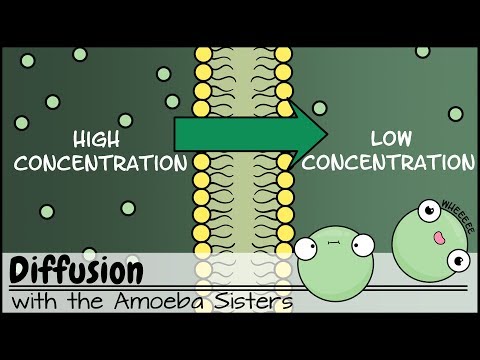
Diffusion - YouTube

This week in Chemicals & Chaos (science) we are looking at Particle theory & Diffusion. 
Diffusion is the movement of a substance from an area of high concentration to an area of low concentration. Diffusion happens in liquids and gases because their particles move randomly from place to place. Diffusion is an important process for living things; it is how substances move in and out of cells.
Particles are extremely small units of matter. 
Particles:
  • All matter is made up of particles.
  • All particles of one substance are identical
  • The particles of matter are in constant motion
  • Temperature affects the speed at which particles move
  • Particles have forces of attraction between them
  • There are spaces between particles. 

Aim: 
Investigate if particles diffuse faster in hot or cold water.

Hypothesis:
I think that the particles will diffuse faster in hot water, because I think that when particles are heated they move faster.  

Equipment:
  • 2 containers
  • Potassium Permangonate
  • Hot Water
  • Cold Water
Method:
  1. Fill one container with Hot water and the other with Cold water.
  2. Add a little bit of Potassium Permangonate
  3. Observe the results
Discussion:
As show in the photo once the potassium was added to both containers the container with the hot water dissolved the potassium faster than the cold water container. 

Results:
The potassium Permangonate dissolved faster in hot water with heat rather than cold water. 

Thursday, July 23, 2020

States of Matter

This term in Chemicals/Science one of the topics we are working on are states of matter.


Wednesday, July 22, 2020

Where The Black Death Fits Into History

This term in Chemicals & Chaos, we are learning about the Black Death. 
One of our tasks was to create a timeline of important events in world's history that includes the Black Death. In that Timeline I had to include my Date of Birth, and two other events that are important to me.
What is the Black Death?
The Black Death was an epidemic of bubonic plague, a disease caused by the bacterium Yersinia pestis that circulates among wild rodents where they live in great numbers and density. Plague among human arises when rodents in human habitation, normally black rats, become infected. 

Thursday, June 25, 2020

Distillation Experiment

Welcome to another blog post, Today in Chemicals *science we did an experiment on distillation.
Distillation is the scientific experiment used to show the process of condensation. 

In this experiment, we are using different types of coke, normal and zero. 

Separating a mixture using Distillation
Aim: To separate a solute from a solvent in a solution using distillation.
Hypothesis : I think that the Coca-Cola will stay the same, and Zero will change. 
Equipment: A solution of different types of cokes, conical flask, heatproof mat, a delivery tube and bung, Bunsen Burner, tripod, gauze mat, retort stand, boss head and clamp, boiling tube. 

Method:

  1. Set up the equipment as shown in the diagram.
  2. Add approximately 50mL of coke to your conical flask. 
  3. Start the element.
  4. Heat the solution until most of the solvent has been evaporated. Turn off the element.  
First we set up the equipment we needed. Our group used the Coca-Cola Zero. 
Images:


Observation:
First the Coke was still and it was just heating up, then it just started to form little bubbles, then it started to bubble up a lot, then it looked like clear water was being sucked by the delivering tube into the conical flask. 
Discussion: In the conical flask that had the coke in it, at the bottom there were some dried sugar left (it isn't a burn mark because if we heat it up it would form bubbles), When we heated the Coca-Cola, it evaporated and it got trapped which separated it, then we used ice to cool it down. I saw steam because it was heating. Our flask had less sugar left over compared to the other group that had the original Coca-Cola that had sugar in it.
But then there was a clear liquid that has been sucked by the delivering tube and I think that it the condensation from the Coca-Cola, I guess there's only one way to find that out, is to look on the ingredients on the Coca Cola bottle. 

Conclusion: This experiment was very interesting and shocking, because I've always thought that the Zero Coca-cola had no sugar in it because it say on the label of the bottle, then doing this experiment shows that there was actually a decent amount of sugar left at the bottom of the flask.